Monday, November 3, 2014

Benefits of Hydroponically Grown Sprouted Fodder

Fodders used especially to feed domestic livestock such as sheep, horses and cattle. Fodders denote particularly to feedstuffs provided to the livestock, rather than that which they feed themselves in grazing and pasture land. It comprises straw, silage, hay, compressed & soiled feeds, oils & mixed rations, and too sprouted grains' & legumes. The fodder method we are discussing here about is hydroponic fodder that is not only cost effective but also takes very less time to grow.

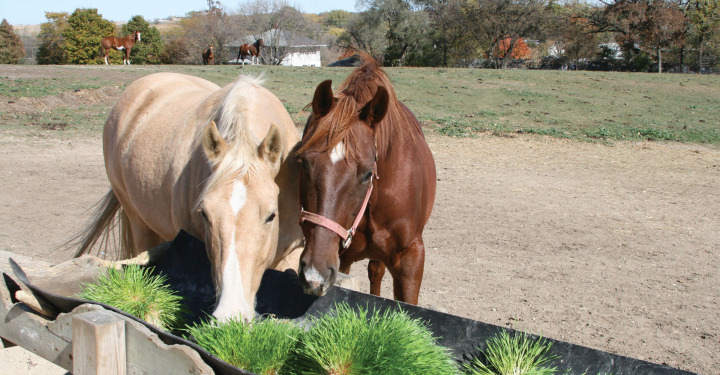
With so many regions of the globe experiencing record drought, many business & individuals who own & raise farm animals, looking for solutions to preserve the health & growth of their livestock could be a tough ask. Sprouting silage on-site could be a reliable & affordable source of feed and dietary supplementation, developing a regional, on demand feed source that can construct great liberty and resiliency for those in farming industries.1559515_712324668834277_960653000268548938_o

Gains of sprouted fodder:

There’re several advantages could be found by making use of fresh barley grass & sprouted grains that had been grown organically & hydroponically. When barley is germinated, it discharges several minerals and vitamins and also converting tough to absorb starches in simply digestible proteins. Few of the advantages comprise:

• Water use drop & preservation compared to on-field irrigationv
• Decrease in overall regular feed expenditures
• Improved supplementary value in the feedstuff
• Higher yield in a small area
• Improve your liberty by cultivating food for your livestock with no require for cultivated terrain.
• Mineral and vitamin diffusion
• Improve in Omega 3, natural hormones, and amino acids
• Evade the increase in feed expenditures by pre-purchasing huge amounts of cereal to have on hand.
• On-demand accessibility of fresh green feedstuff 365 days a year
• Phytate drop for pH normalization

Follow Terravida Group on:-

Thursday, October 30, 2014

Hydroponic Farming – No More Issues of Global Warming, Water Shortages & Ground Water Pollution

Grass fodders are used as animal feed that can be cultivated in huge amounts within eight days from seed to grass for all livestock. There are various types of grass fodders one can avail, including oat grass, barley, rye grass, lucerne grass, etc. Growing grass fodder through hydroponic technology is now turning out to be popular in drought-prone regions.


Hydroponic fodder

Hydroponics has been there since Babylon days and is the skill of growing grass and plants without the involvement of soil. As far as hydroponic method is concerned it is very easier to feed the plants with the nutrients they require most. Given the appropriate conditions the plant makes uses of what they require for the best growth.

There's no soil, no soil pests' & concerns about Mother Nature devastating your plants. Also no worries when water dries out, acidic soils slaughtering your vegetations, bad water or bad weather infecting the plants. Water-loss is due, mostly to evaporation but because hydroponic is a closed method the plants have nutrients and water as they require.

With increasing global warming, water shortages, more land based disasters, ground water pollution from industries and agriculture, herbicides and pesticides on the increase – now hydroponically grown veggies for human use & grass fodder for animal feed are in demand, particularly in arid nations like the Middle East. No doubt hydroponic is the future of agriculture feed not only in the Middle East but also other regions of the globe where soil conditions are worse, water supplies are limited and temperatures are extreme.

For the home gardeners growing veggies and green fodder, hydroponic is an effective system to consider. There is a range of hydroponic methods' avail, with many saying they’ve the best formula. However, it is a matter of starting small to distinguish if you really like the idea, if it fits your needs, pocket and time.

Tuesday, October 28, 2014

Growing Green Fodder for Livestock Through DIY Hydroponic System

Buying feedstuffs for your farm animals may become an essential and often costly affair, if you’ve a big farm, or if you raise a lot of animals at your home. You might encounter a shortage of organically growing silage or grasses at your grazing lands where you forage your sheep or cattle, and might require to nourish your animals with additional food supplements that are high in mineral value, in addition to what they consume at the grazing grounds.

Particularly during spring season, the climate condition could be very unkind to organic grasses to grow up. It’s essential that you provide your livestock with feedstuff throughout the spring season to deal with the wet and cold climate in case you do not have an adequate supply of grass on your meadow, or if you’re anticipating harsh climate in the near future. Purchasing a good supply of silage or microgreen fodder from the regional market could become costly. In such circumstances, you can consider growing grasses hydroponically.

Grow grasses through DIY hydroponic method:
 
You can produce a wide range of micro greens and grasses via your own DIY hydroponic method without any costly equipments or much operating expenditure.hydroponics-for-livestock-fodder All you require is some trays, seeds' & water to nurture your seeds.
You could cultivate different types of grasses inside your trays, like barley, wheat, corn, and so on within a very short span of time; generally inside a week via hydroponic method. The grasses you cultivate in your trays don’t require a whole lot of attention, and the quality of the green forage grown this way is extremely affluent in nutrients. Livestocks truly love this kind of fodder. 

What’s Hydroponic Sprouting?
 
In soil, natural substance breaks down into supplement salts that plants or vegetation feed on. Water liquefies these salts & permits uptake by the roots. For any plant to obtain a well-balanced diet, the whole thing in the soil should be in appropriate balance. Such perfect states are unusual in soil.

Apart from receiving an ideally balanced diet, hydroponically grown plants have their water and food supplied directly to their roots. In this way, the energy generally employed to build up long roots could be directed to producing more leafy substance. It is natural, environmentally accountable, safe and sustainable. Sprouts are well suited to hydroponic production.